Wednesday, 27 July 2016
Marketing lessons from the #IceBucketChallenge
Saturday, 22 August 2015
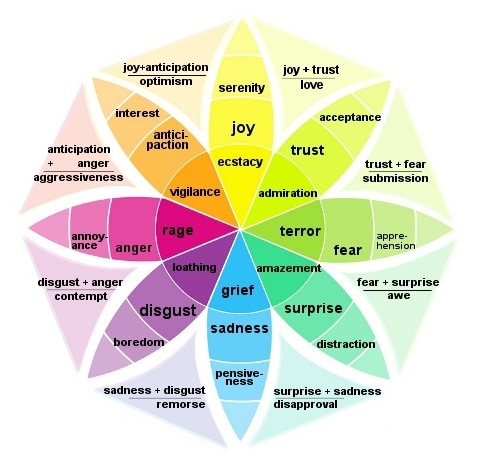
Why making your readers cry will improve your content marketing
- an emotive email subject line
- unexpected video content
- social media conversation starters.
About the author
Thursday, 20 August 2015
Catering for a range of learning styles with your content marketing
Content marketing that caters for a range of learning styles [Share on Twitter]
Video for visual, auditory and reading learners. http://t.co/OycmXlEpJu
— onvedeo (@Onvedeo) August 17, 2015
- Consumers conduct extensive research before making important buying decisions.
- Content marketing has an important role in educating your audience.
- People learn in a range of different ways.
- Content can be re-purposed to cater for a range of learning styles.
Tuesday, 18 August 2015
Establishing trust and credibility in your marketing campaigns [speed read]
Why content credibility matters
Finally, and perhaps most importantly, a good online experience for visitors to your website matters in the same way that a good face-to-face experience does. It is a touch point that contributes to achieving the strategic goal of achieving and maintaining high customer satisfaction levels.
Segment your audience. Understand who the decision making units and influencers of decisions are. [click to Tweet]
3 Ways to Segment Your Email Marketing Audience for Better Engagement - (A) http://t.co/zDWgqeqS79
— State of Digital (@stateofdigital) August 16, 2015
- social listening exercises (including sentiment analysis)
- primary research, such as telephone interviews
- secondary desk-based research.
B-to-B marketers continue to benefit from lead nurturing campaigns. #B2BMarketing via @KoMarketing http://t.co/1io1zYURe8
— BMA National (@BMANational) August 18, 2015
6 Practical #Tips For Building Relationships & Establishing Trust With Social Media - ModernLifeBlogs http://t.co/rx2Loi8yiC
#SocialMedia
— ModernLifeBlogs (@ModernLifeBlogs) August 18, 2015
- analysing the interviews you carried out in step 2
- studying correspondence into your call centre
- assessing the terminology in online forums and social networks used by your target audiences.
- ensure the message received is the one you think has been delivered
- understand what key messages can be recalled
- learn about how your content made the reader feel.
How B2B companies can use customer feedback to boost their bottom line: http://t.co/cLtP84gorV [new ebook] #UX #mktg pic.twitter.com/9QUoYWSFzr
— UserTesting (@usertesting) August 18, 2015
"The greatest problem with communication is the illusion that it has taken place" -
George Bernard Shaw
Tuesday, 30 June 2015
11 essential items to include in a content brief
Providing a detailed and accurate writers brief is essential in ensuring the content returned is as close to the desired end result as possible.
11 essential items to include in a content brief [Share on Twitter]
1. Audience profile
Provide details about the intended audience. Give information about their demographic make-up; likes and dislikes; level of existing knowledge regarding the subject areas to be covered, and so on.
Understanding the profile of the target audience will give the writer the best possible insight into the appropriate use of historical and cultural references to use to illustrate their content. It will also affect the tone of voice selected for the piece.
Learning from Q&A--Build your audience profile and then develop your content around what it is your audience wants to see #briteassembly— GA Melbourne (@MelbourneGA) June 4, 20152. Key messages to be delivered
Consumers of digital content are time poor. If your audience reads one paragraph of your content, which key message needs to be delivered above all others? [click to Tweet]
Providing such guidance to writers will help to ensure accurate placement of content (above the scroll; in H1, H2 headers; meta descriptions, and so on).
3. Narrative
It is likely that the content being created forms part of a wider narrative and is one of many touch points that the reader will have with your brand.
Clearly explain to the writer which materials the target audience is likely to have accessed before, and content that will follow.
How to find the narrative in your content marketing, via @Kimota: http://t.co/DfBRqvYcTW— SlideShare (@SlideShare) June 30, 20154. Tone of voice
If your brand guidelines don't already contain guidance, consider providing the author with a tone of voice document which details where the content should be positioned along a number of continuum’s:
- serious/fun
- authoritative/insightful
- contemporary/modern
- formal/relaxed, and so on.
Your Brand’s Tone of Voice and 5 Reasons Why You Should Care About It http://t.co/fqsLZwQfDK #branding #marketing— Juntae DeLane (@JuntaeDeLane) June 30, 20155. Takeaway messages
Be explicit about what the takeaway messages of the content should be. Describe how the reader should feel after accessing the content, and the key points they should be able to recall. [click to Tweet]
6. Word count / article length
It sounds obvious, but be clear on the required content length. Too many words may lead to heavy editing which affects the narrative. Too few words and the content may fall short of achieving its objectives.
If you are asking writers to provide titles, meta descriptions, email subject lines, and so on, remember to be prescriptive with character limits, to help ensure your digital content is fully optimised for the platform used.
Research shows 1500 word blog posts get more links, shares and views. But be careful not to pad content for length. https://t.co/eHpifZI2K0— samanthastone (@samanthastone) June 30, 20157. Content format
Be clear about the format the content being produced will take (blog post, slideshare, infographic, email, eGuide and so on). This will have a significant impact on the writing style used. Where possible, provide examples of existing content in the same format.
8. Keywords
Provide the writer with details of the keywords and phrases that the content needs to include. State where these keywords should to be place within the copy, and the density of use.
9. Trusted sources of background information
Provide links to any sources of information you have that will help them understand the subject area in greater detail.
This should not be a replacement for the desk research that they conduct themselves, but simply provides examples of trusted sources of credible information.
10. Deadline! #PR Tip: Be sure to always comply with a reporter’s deadline & communicate w/ clients in a timely fashion.
Provide clarity on the deadline for content to be completed. Where necessary, indicate the number of amends cycles that are likely to be required. This will help writers to plan their time effectively in order to deliver on time.
11. Publication date and place
Many copywriters like to provide links to the content they have helped to create on their own websites and blogs. It's a great opportunity to get an all important back link or two!
What are your must include items?
Tuesday, 17 February 2015
How to keep your digital estate on-track
Website Content
Your credibility on Google grows improves SEO faster if you constantly update your website with fresh content #fact #SEO
— Francois Karstel (@SoundIdeaDMA) April 16, 2015
User Experience
- user experience testing workshops
- content rating and review software
- online surveys
- mouse tracking studies.
Tests and mouse tracking: the absolute weapons to optimize your #userexperience http://t.co/me5RdGvv1y
— Content Square (@ContentSquare) June 9, 2015
Domain management
Effective domain management still pulls a lot of punches with search engines. It is also an important part of your branding, so deserves special consideration:Age - domain authority demonstrates to external search engines that your website belongs to a credible organisation with longevity. Secure domain names as soon as possible, and retain them after retirement as part of brand guardianship.
Ignoring #social media means someone else can stake their claim on your behalf.Read more: http://t.co/3ZOCJNlbA4 pic.twitter.com/u8CByVFf0j
— Social Media School (@TSMTSchool) May 28, 2014
Sub-domains - an effective way to maximise marketing efforts across a number of channels is via the use of sub-domains: http://subdomain.domain.com. This way, traffic generating activity benefits one central digital space, and both can benefit from the SEO advantages this brings.
File structure - remember that the file structure following your domain extension provides search engines with important information about your websites content. The closer your keywords are to the root of your domain name, the better - for example:
...com/ladies-shoes.html
is much stronger than
...com/our products/shoes/ladies-shoes.html
All too often file structures focus on generic functional keywords (about us, contact us) instead of product and service offering (ladies shoes, ladies sandals, and so on).
Social media
Brand guardianship - not every social media platform will suit your requirements - this depends very much on your product, service, and industry. But even if you don't plan on using a particular social media you should claim the vanity URL (before somebody does it for you). If you do this, it is a good idea to populate at least the landing-page with basic information which points back to your website.
Integration - be sure to automate posts where it is sensible to do so. For example, you can configure Blogger to automatically post content to Google+, or post tweets to your Facebook Page. The important factor to monitor here is that you post content in a format appropriate to the platform - you will need to re-tweak your content in order to do this effectively.
Cross-refer - most people use more than one social media platform, so remember to provide clear links to other ways that people can follow you, such as Twitter and Facebook.
Conversation calendar - creating a conversation calendar will help to keep your content flowing and will ensure that you don't miss opportunities to capitalise on the buzz around planned events in your industry.
Remember, there are a host of free tools out there that allow you to schedule your posts in advance (such as Hootsuite and SocialOomph).
Compliance
Meeting statutory and best practice guidelines demonstrates to search engines, as well as your target audience that you mean business, and are safe to do business with!Schedule in time to review your governance policies to make sure they remain up-to-date.
In the UK and Europe, you may want to include compliance with:
- Cookie consent (EU law)
- Royal National Institute for Blind guidelines on accessibility
- Advertising Standards Authority
- W3C
Friday, 26 September 2014
5 Facebook Tactics to Increase Engagement
I recently attended a Facebook Master Class, run by Social Media Advance. Here, I share the top 5 tactics I took away from the course.1. A (cover) picture is worth a thousand words
When the average user logs on to Facebook there are 1,500 potential updates could feature in their newsfeed. Facebook therefore serves what it judges to be the posts that will be of most value and interest. These are posts from individuals, pages, and groups that the user interacts with most frequently. If you are at the stage of trying to building an audience this can pose a particular challenge – only 5% of your posts are likely to appear in followers newsfeeds organically.One tactic to overcome this is to update your cover photo regularly - as notification that you have done so always appears in news feeds of your followers. This provides a touch point between your brand and your audience, reminding them of your presence and increasing the likelihood of engagement.
Beware not to use cover photos in place of posts. No more than 20% of your cover photograph can be text - Facebook have a text overlay detection tool to help you stay compliant.
Updating your cover photo too frequently could also prove a turn-off for your followers, so use this tactic sparingly.
2. Pinned posts
If there is a message that you want to remain at the top of your Facebook page, you can pin it by hovering over the drop-down arrow in the top, left-hand corner of the post. Pinned posts automatically stay at the top of your page for 7 days – increasing exposure for important messages.3. Less is more
Posts of up to 80 characters get 27% more engagement so keep them brief to encourage comments, likes, and shares.Be succinct on Facebook - you may have a lot of space but posts of 80 characters and less are the most engaging. #FacebookTip
— Evolve BD - Karen (@EvolveBD) March 4, 20154. Full length URLs
Posts with links detailing a full length URL generate 3 times more engagement as users trust the destination site as a trusted source. Keep shortened URLs for platforms with character limits - such as Twitter.5. Ask and you shall receive
Posts asking for likes, comments, and shares gets 30% more engagement, so design your messages in a way that encourages interaction.On that note, if you have found these tips useful, please 'say thank you' with a share, follow (Twitter), or like (Facebook).